

When LP Involvement Actually Helps (and Why)
One of the most distinctive things about Stage 2 is our belief that founders deserve more than money. They deserve a go-to-market community that shows up, shares experience, and helps them move faster with fewer costly mistakes.
That is exactly why our LP Go-to-Market Advisor program exists.
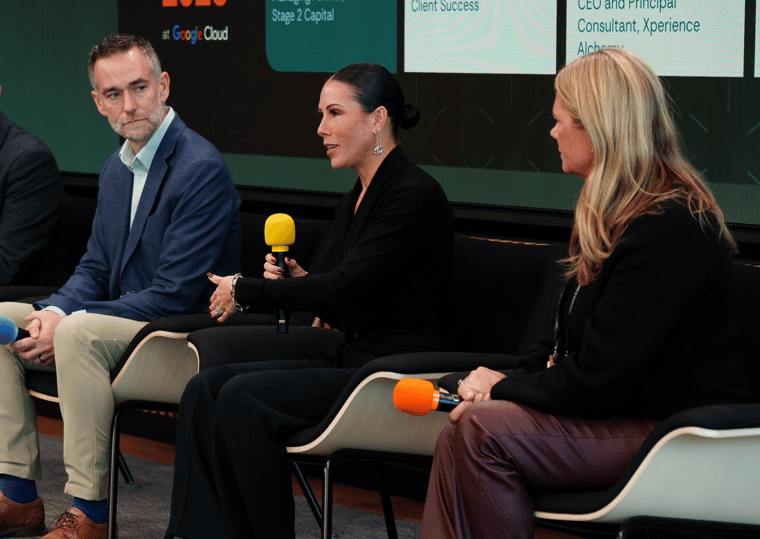
At our 2025 LP Summit, I moderated a conversation with three LPs who’ve been doing this work in the trenches: Kristi Faltorusso, formerly the Chief Customer Officer at ClientSuccess; Parker Chase-Corwin, CEO at Xperience Alchemy; and Brent Holloway, Founder of SaaS Sales Advisors. Between them, they’ve helped portfolio leaders define ICPs, hire critical early team members, build retention discipline, implement coaching systems, and pressure-test GTM execution.
What struck me most was how consistent their advice was, not just on what to do, but how to do it in a way that truly helps the operator on the other side of the table.
This advice is critical for LPs who want to get involved but aren’t sure where to start.
The best LP support is rooted in “give to get”
Kristi captured something we hear often from LPs who become advisors: this work is meaningful in both directions.
“I didn’t have anyone guiding me,” Kristi said, reflecting on the earlier phases of her career. “I had no resources..I had nobody to turn to. When this opportunity came up, I saw it as a moment of selfless giving, one where I could offer that support to these leaders when it mattered.”
And the time commitment does not have to be huge to matter. “If we’re giving an hour, two hours, three hours, even four hours a month, it’s worth the investment,” Kristi said.
That’s the point: you don’t need to take on a second job. You just need to show up consistently and be willing to share what you’ve learned the hard way.
Fit matters, and the first conversation sets the tone
One of the most practical parts of the discussion was how to approach that first intro call. Often, a GTM leader will meet a few different potential advisors before deciding who’s the best fit.
Parker put it simply: “Fit’s important… you’re both feeling each other out.”
He encouraged LPs to be explicit early, not only about what you can help with, but also what you need from the operator to make the relationship productive. “It is a commitment on their side as well,” he said. “They’ve got to make sure they’re creating space for you to understand their business.”
Kristi added a tactical unlock that many LPs overlook: bring structure, because the operator may not yet know how.
“Sometimes these operators show up to these calls really not knowing how to facilitate it,” she said. “If you could come with an outline and an agenda and a structure, you’re already creating value for them.”
A simple agenda isn’t corporate overhead. It’s a gift that lowers awkwardness, accelerates trust, and gets you to the “real” work faster. It also models how to run a meeting for people who are going to have to run a lot of meetings.
LPs create leverage by operationalizing the fundamentals
When we talk about LP support, people sometimes imagine a dramatic strategic pivot or a single magic insight.
In reality, the highest leverage is often helping a team execute the basics exceptionally well, especially when they’re doing something for the first time.
Brent described the line between strategic and tactical as “blurry,” because so much of early GTM is: define the right thing, then implement it under pressure.
“We’re meeting with a rev ops leader to define lead criteria and lead scoring,” he said. “but it starts with, ‘what is my ICP; what are the most productive and efficient sales scenarios producing the best unit economics?’ Meanwhile and equally important, where are we spending a lot of time and resources for inefficient returns that can be reallocated?”
Parker shared a similar example around hiring: working with a team that hadn’t built the function before and needed a repeatable process.
“We went through the whole process of how to interview, how to make sure you’ve got the right interview team involved,” he said. “They didn’t have time to mess around; it was one of those really key hires they had to nail.”
This is where LPs shine: you can help a team “measure twice, cut once” on decisions that are expensive to get wrong.
Great advisors don’t just advise. They build confidence and accountability
The hardest transition for many operators-turned-advisors is realizing you are not the one doing the work anymore. Your job is to help someone else do it.
Parker highlighted the human side: “Building their confidence is a huge part of it. It’s more than just helping put out the fire; it’s helping them feel empowered so that they can handle the next one on their own.”
Kristi emphasized accountability as the bridge from insight to impact.
“Our next session will always start with where we left off,” she said. “That will hold them accountable to taking that necessary action.”
She also noted something important: accountability works best when paired with support. When things go well, the operator should take the credit. When things go poorly, the advisor helps them reset and try again with better inputs.
Help doesn’t mean buying more tools
AI came up because it’s now a common request in advisor profiles, and many teams feel behind.
Kristi’s principle was refreshingly grounded: “I’m not going to advise them to go buy more technology.” Instead, she starts with what teams already have (ChatGPT, Claude, etc.) and uses sessions to build “muscle memory” around prompts, workflows, and creative problem-solving.
“Before they even ask me the question, they know I’m going to respond with: ‘Great! Now, how are we going to solve that with AI?’”
Brent shared two practical tactics that any LP can help implement quickly:
- Pre-call prep: have an LLM generate account context, risks, and hypotheses before a customer meeting
- Post-call coaching: use a transcript + scorecard to evaluate calls (“what did they do well, what could be better?”)
These are simple, low-cost ways to make teams faster — and they compound.
A note on staying aligned with CEOs
One of the recurring challenges in advising is that day-to-day fires can pull you away from the company’s true priorities. The panel shared a consistent answer: keep the CEO in the loop, even lightly.
Kristi shared a great example: a CEO who sends a monthly recap of priorities, gaps, and wins, and then using that to shape coaching conversations so leaders two levels down can connect their work to what matters most.
Parker shared his own learning: without periodic CEO context, “you could end up advising the operator without alignment to the overall company strategy.”
And in many cases, we’ll also run periodic multi-advisor check-ins with the CEO so everyone stays aligned and the loop stays closed.
The invitation
If you’re an LP reading this and you’re curious about advising, here’s the bar:
- You don’t need 10 hours a week
- You don’t need the “perfect” expertise
- You do need to be willing to show up, bring structure, and share what you know
As Brent put it: “Don’t be afraid to put a question out there. A lot of LPs are happy to help, and then who knows what comes out of it after that.”
That’s the Stage 2 flywheel at its best: help offered freely, impact created quickly, and relationships that deepen over time.
If you want to raise your hand, watch for the upcoming LP communication with opportunities, or reach out to the Stage 2 partner you work with. We’d love to plug you in.